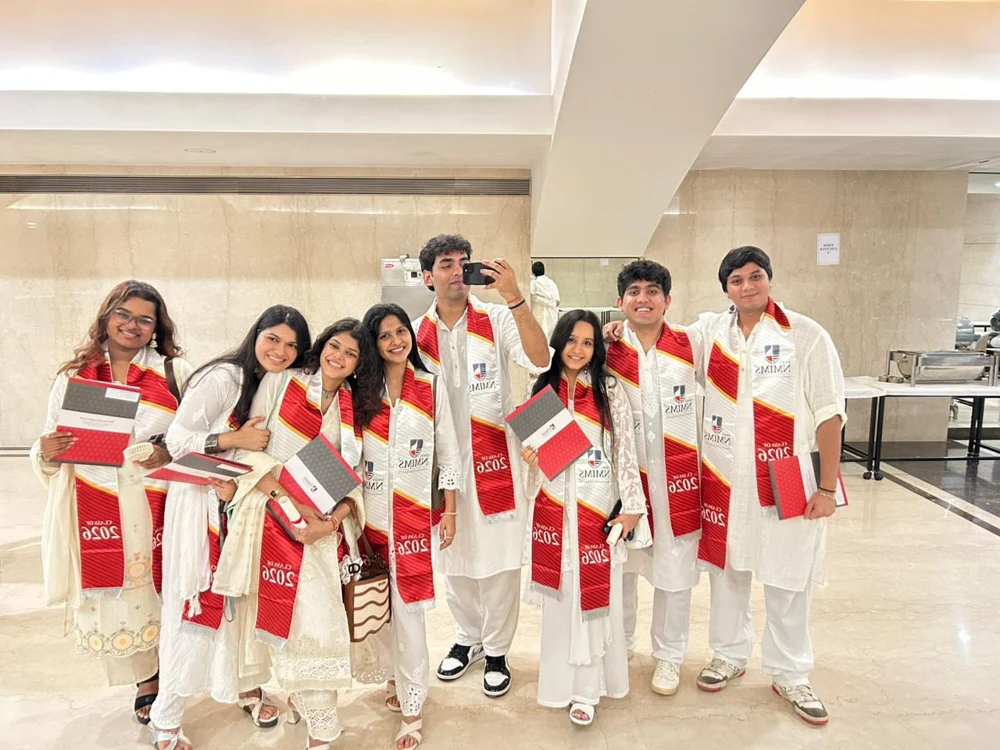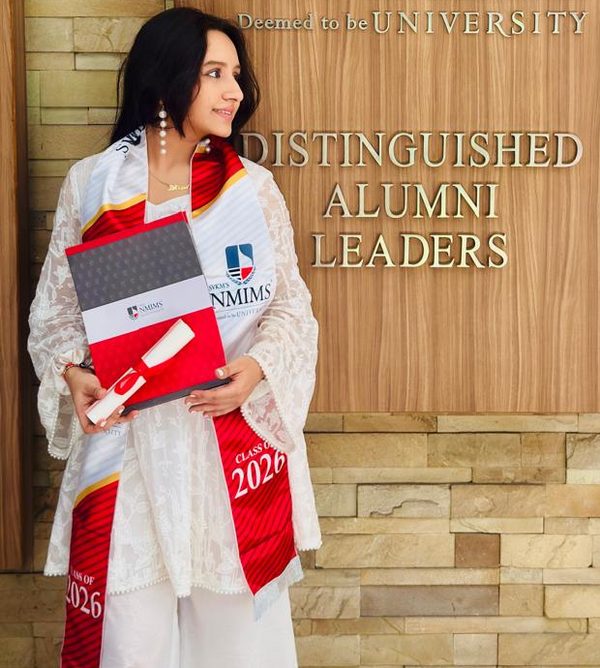
Dhruvi Paprunia at her NMIMS graduation

Applied AI researcher

Hi :)I'm DHRUVI I teach small models to do big things.

  • Reinforcement learning
  • RL environments
  • Evaluations
  • Small language models
  • Agentic AI
  • Inference engineering
  • Local models
  • Robotics

I explore how AI learns, reasons, and acts, and turn that into systems people use. At JioHotstar, I build applied AI for real users.

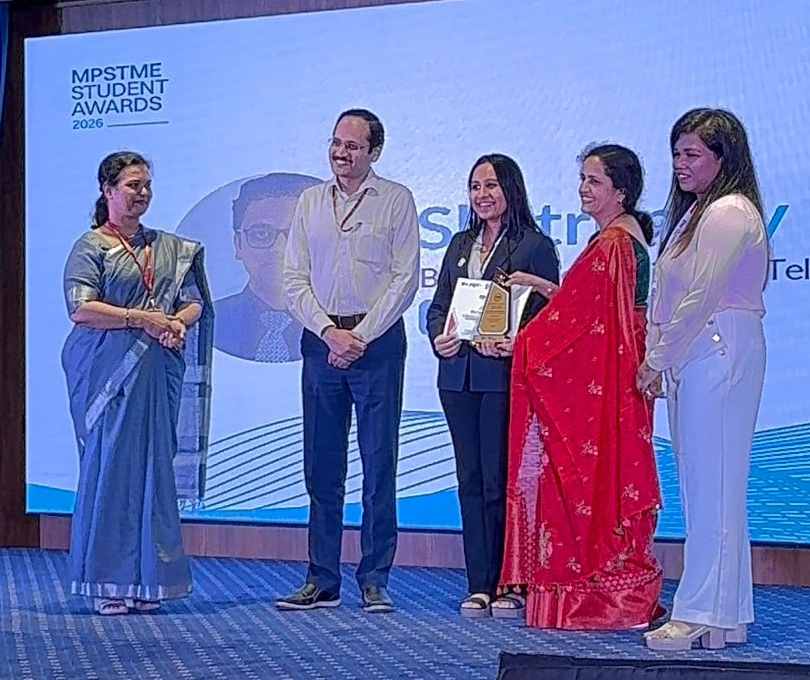
Dhruvi receiving her research award with the stage group
Best Researcher Award · NMIMSDean's List

Research

4 AI research papers

Small models, recommendations and computer vision. These are the four papers that came out of that work.

small model→tool call

Advancing SLM Tool-Use Capability using Reinforcement Learning

A small model can learn to call a tool correctly, without adding extra text.

First author · IEEE AIC 2025

Qwen2.5-3B · tool-call accuracy

Method details
  • The GRPO reward checks JSON structure, tool names and arguments, so the model learns from rewards rather than a written answer for each example.
  • Even a correct tool call gets zero reward if the answer includes extra text.
  • The run used 4,000 xLAM training examples and 1,000 held-out examples, with 500 training steps on one T4 GPU.
  • This is one dataset and a short training run, without a direct comparison to other reinforcement-learning methods.
colour + shape→outfit

Towards Actionable Fashion AI: A Holistic, End-to-End Style Recommendation Assistant

Clothing suggestions based on seasonal colours and body shape, including what to avoid.

First author · IEEE RCSM 2025

61%

Seasonal-colour accuracy · DINOv2 vision model

Method details
  • DINOv2 handles seasonal-colour analysis. Qwen3-7B handles body-shape classification, using a curated dataset of 1,482 images across four body types.
  • A rule-based engine combines colour theory and silhouette advice. It returns 20 to 25 suggestions per session, including what to avoid.
  • The abstract reports a 5-second runtime on 8 GB phones. The full evaluation split and comparison setup still need manuscript verification.
movies→books

LightFusionRec: Lightweight Transformers-Based Cross-Domain Recommendation Model

Start with movies a person liked, then find books they might like too.

Co-first author · IEEE SSITCON 2024

Text alone1.9925
Text + genres0.6918

Mean absolute error in the top 20% setting. Lower means closer to the actual rating.

Method details
  • LightFusionRec combines text features from DistilBERT with genre features from FastText.
  • The model expands 50-number genre vectors to match the 768-number text vectors, then joins them through a learned fusion layer.
  • Training uses cosine embedding loss to bring matching movie and book features closer together. Training used batches of 32 for 2 epochs; training for 10 epochs overfit.
  • Book features are computed ahead of time. At recommendation time, the model only needs to process the movies a person supplies.
  • The evaluation covers books and movies, not changing tastes over time. Hardware and a train/test split are not specified in the available text.

Amazon Reviews: 45,000 books and 65,000 movies after cleaning. Evaluation uses users who rated both domains, retaining ratings of at least 4 out of 5.

camera→identity

Advanced AI-Based Detection and Tracking System (ADTS) for Crime Prevention and Identification in Real-Time Surveillance

Detect people in CCTV footage and keep track of their identities across cameras.

Second author · ICOCT 2025

83 FPS · 89.8% IDF1

Frames per second · IDF1 measures consistent identity tracking

Method details
  • The system uses YOLOv8, MTCNN and FaceNet to detect people and track identities across CCTV cameras.
  • The dataset, evaluation split, comparison system and hardware still need manuscript verification.

four papers, more to come

These days, most of my work comes down to two things:

onegetting small models to do more than people expect
twomaking sure the AI I build still holds up once real users get their hands on it

Work

Things I've built

Open a card for how I built it, or explore the other projects below.

Work · JioHotstar

Text-to-SQL sports chatbots

96% on 150 questions

Built two chatbots, one for cricket and one for kabaddi.

How I built it

yes, the chatbot knows kabaddi.

  • The kabaddi pipeline checks whether a question fits the data and whether it follows up on an earlier question. It then analyses the question, generates SQL, runs 10 static checks, and turns the result into a plain-language answer.
  • The hard part was getting numbers and rankings right. I worked on entity resolution, multi-season queries, when to use RANK() rather than LIMIT, and deterministic calculations. An answer verifier checks for invented numbers.
  • The cricket bot uses match and ball-by-ball data from the Cricinfo API, normalised into two tables with over 43 columns. I moved it from Streamlit and SQLite to Next.js and PostgreSQL, with a five-message context window.
  • The kabaddi bot covers 12 seasons in English, Hindi, Hinglish, Gujarati and Marathi. The cricket bot covers men's and women's T20 data from 2007 onwards.
Databyte internship

Multi-camera CCTV tracking

CCTV work became an IEEE paper

Built real-time face tracking across multiple CCTV feeds.

How I built it

same face, different camera.

  • YOLOv8 and MTCNN detect faces and people. OpenCV prepares the frames, while FaceNet/InceptionResnetV1 turns faces into features that can be compared.
  • I worked on cosine-similarity thresholds for matching faces. Cross-camera checks also ask whether the time and location make a match plausible.
  • The preprocessing includes Gaussian blur, histogram equalisation and Sobel edges to identify the region of interest. This work contributed to the ADTS paper.
Work · JioHotstar

HR AI Coach

For 6,000 employees

Answers questions from company handbooks and helps people work through what to say.

How I built it

a handbook answer is only half the job.

For policy questions, it searches by meaning and by matching words, then checks details like which policy applies and when it took effect.

Employee records take a different route: tools with defined inputs query the SQL database directly. Those facts do not come from a similarity search over text.

Access checks happen before anything is retrieved. The model only gets information the person is allowed to see.

Small adapters translate each source into one shared data model, so the coach sees the same language for goals, reporting lines and job responsibilities. Each kind of fact has its own table, and each record keeps its source and date.

Verified HR records, chat summaries and coaching notes stay separate. Generated text never becomes an HR fact. Answers show their sources, and application code supplies the guardrails.

Other projects (11)

Personal project

Salary negotiation bot

Compare two negotiations

Predicts a salary, then lets you negotiate with a bot. A second bot negotiates the same profile so you can compare.

How I built it

who got the better deal?

  • A machine-learning model predicts the salary.
GitHub ↗
Project

Episode condensation

43% shorter

Cut one episode from 24:33 to 13:56 by removing recaps, gaps and pauses.

How I built it

same episode, less waiting.

  • The input is an Excel dubbing script, including timecodes, dialogue and character data. A four-pass pipeline uses that script to find cuts before ffmpeg edits the video.
  • The cuts target ad-break gaps, repeated recaps and short pauses.
  • The comparison used two Muskaan episodes. Episode 152 was shortened from 24:33 to 16:43, a 31.9% reduction; the card above shows the larger cut achieved on Episode 153.
Work · JioHotstar

Music copyright detection

180+ songs

Checked music-recognition results by ear against cue sheets.

How I built it

trust the tools, then verify by ear.

  • Compared ACRCloud, AudioShake and Gemini.
  • AudioShake did best on music-only audio, with scores of 80.8% to 90.1%.
  • Moved timestamp calculations out of the language model and into Python, taking Gemini to 64%.
Work · JioHotstar

Audio separation pipeline

Tested on 4 channels

Uses different Mel-Band RoFormer models for different jobs: lead singing, backing vocals or instruments.

How I built it

different models, different jobs.

  • Lead singer: Model 4 Vocals or Model 6 Lead_Vocals.
  • Choir: Model 4 Instrumental or Model 6 Backing_Vocals.
  • All singing together: Model 5 Vocals, or Model 1 Vocals for a more karaoke-like result.
  • Separate drums, bass, guitar and piano: Model 3 or Model 7.
  • The whole band in one file: Model 5 Instrumental or Model 6 Rest_Instrumental.
Work · JioHotstar

Sales Agent

Top 5 shows

Turns a brand's brief into show recommendations and a pitch deck for the sales team.

How I built it

from a brief to a pitch.

  • The first step turns a PDF, Word file or URL into a structured brand brief. Instructor validation checks that the extracted fields have the expected format.
  • BGE-M3 embeddings find shows with a similar theme. Rules also consider language, audience, category, ratings, reach and sponsorship signals.
  • The ranking narrows 16 shows to 8, adds a language-model score and a diversity check, then reranks to the final 5. Those choices become the pitch deck.
  • The Streamlit app has single sign-on and audit logging. Product and sales sessions helped shape the requirements.
Work · JioHotstar

HR onboarding videos

5 models tested

Tested five lip-sync models, then built a workflow for personalised onboarding videos.

How I built it

a welcome with a familiar voice.

  • I compared HeyGen, SadTalker, LatentSync, Wan2.2-S2V and MuseTalk. LatentSync gave the best quality in that comparison, using guidance_scale 1.5 and 30 inference steps.
  • Google Sheets provides the inputs. n8n runs the batch workflow, ElevenLabs provides the voice, and the workflow generates each personalised video before email delivery.
  • The workflow supports a full three-minute HR video within the HeyGen plan limits.
Project

Personalized news recommender

Article text + reader preferences

Built a news recommender that uses what an article says and what the reader likes.

How I built it

news that fits the reader.

  • Java and Spring Boot microservices, with service discovery and an API gateway.
  • TF-IDF compares article text with user preferences. Docker packages the services and Kubernetes runs them.
PshPyi Labs internship

Personal branding agent

Personalised post workflows

Co-built a platform that writes, schedules and publishes social posts. I designed the workflow nodes that make the posts personal.

How I built it

less generic, more you.

  • The workflow runs on n8n, covering content creation, scheduling and publishing.
  • Language models generate posts for LinkedIn, X and Instagram.
Work · JioHotstar

Cloud cost dashboard

4 days → 5 min

Brings cloud costs from 62 GCP projects and 13 AWS accounts into one dashboard.

How I built it

four days was a bit much.

  • GCP data comes through Playwright extraction and project discovery. AWS costs come from Cost Explorer into a SQL Server billing store. Stored procedures build the combined cloud view.
  • I cut the GCP export run from 12 minutes to 1 minute 10 seconds using parallel discovery and handling each page according to its content.
  • Backfill and scheduled jobs keep the history current. Budget indicators mark 70%, 90% and 100% usage, with Excel exports and Slack health alerts.
  • Azure single sign-on, role-based access and audit logs make it usable by different teams. I also worked on login persistence and gaps in the master data.
Work · JioHotstar

Music catalog downloads

~10k audio files

Automated music downloads with checks on every file and catalog ID.

How I built it

the boring part, on autopilot.

  • Playwright follows the music library's full genre tree and saves tracks as WAV files in cloud storage.
  • ProcessPool runs downloads in parallel. A lock stops workers from clashing, while systemd keeps long downloads running.
  • Each file is checked against its track title and catalog ID.

Personal project

Hacker News → tweets

15 stories → 10 tweets

Turns the day's leading Hacker News stories into tweet drafts.

How I built it

the headlines, without the tab pile.

  • CrewAI reads and summarises the stories, then drafts tweets from them.
  • Built the interface in Streamlit.
GitHub ↗

About

What happens if I try?

I like finding out what a model can do, then building something people can use.

My path into research

Underlined links open more

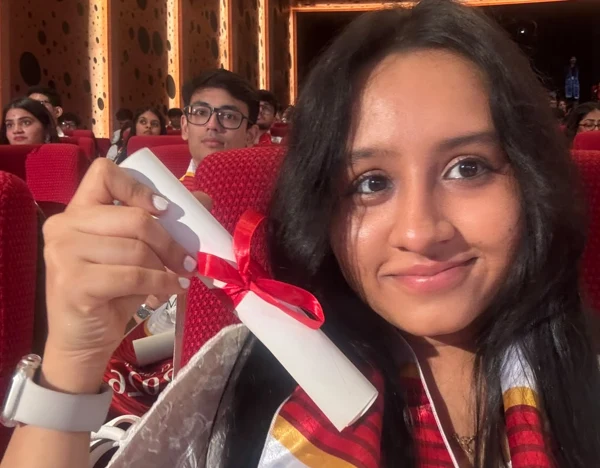
Dhruvi at graduation, holding her scroll

A day worth remembering.

2022Beginner
I didn't know how to code
2023Getting started
2024Discovering research
First research paperCCTV work became a paperBegan GRPO experiments for small-model tool use
2026Applied AI arc
Graduated from NMIMSBuilt sports question-answering chatbotsBuilt a cloud cost dashboardHR coach + sales agentPromoted to Senior Executive, Data Science & Analytics

Awards & roles

Beyond the papers

College was never just about academics for me.

  • Research Head, IEEE Robotics & Automation Society, NMIMS
  • Student Coordinator, Student Research Group, NMIMS
  • Sub-Head, Google Developer Student Clubs, NMIMS (400+ students)

Writing

Explained simply

All writing →

less jargon. more getting it.

Say hi

There's always another question hiding behind the answer. Send me yours.

you made it all the way down.
most people don't. thanks ; )

Do you want to see my after-work self?Click here